
Lomita Resident Lookup Coverage
Lomita has no separate deed, trial-court, or vital-record system. The deciding geography is Los Angeles County, with California state offices adding voter, vital, license, adoption, and privacy routes. A useful records search starts by choosing the record role that matches the question. An assessor parcel may show ownership clues. A court index shows a party occurrence. A vital record establishes an event. A business filing identifies an entity role. None should be silently relabeled as a current household or residence.
| Record set | What it can establish | Custodian or portal | Access path |
|---|---|---|---|
| Assessor parcel | AIN, situs, legal description, values, characteristics, and transfer clues | Los Angeles County Assessor | Free address/AIN search; specific owner by phone, counter, or contact form |
| RR/CC recorded document | Indexed parties, instrument type, recording date, and legal-description trail | RR/CC Real Estate Records | Norwalk name/year index; mail, LexisNexis, or counter copies |
| My Voter Status | One person's authenticated status, party, vote-by-mail, and election information | California Secretary of State | Free personal match; file use needs an approved purpose |
| LASC court index | Litigant name, case type, filing date, location, and image count | Los Angeles Superior Court | Case number free; party or defendant name search paid |
| Vital record | Birth, death, marriage, or dissolution event association | LA RR/CC or CDPH | Informational and authorized-copy routes differ |
| Business/license | Entity, officer, agent, license status, and public business address | SOS bizfile or DCA | Free indexes; role and address must be labeled |
| Unclaimed property | Name tied to a holder and reported city or ZIP clue | California State Controller | Free search; a claim requires proof |
| Probate file | Decedent, petitioner, representative, and public heir trail | Los Angeles Superior Court | Public access varies with redactions and confidentiality |
Start with the strongest clue already in hand. An address points toward the Assessor AIN. A court case number avoids a paid name search. A birth or marriage question belongs with the record custodian rather than a public-record request. An older family lead may need the library and historical directory collections before any current source is searched.
Normalize a Lomita Resident Name
A same-name match is only a starting point. The right-person test in the Lomita research calls for a full name, former surname, middle initial, spelling variants, and a dated local anchor. Keep the role attached to each result: owner, tax-mail recipient, court party, registered voter, licensee, business agent, permit applicant, or directory subscriber. A mailing address can differ from the situs address, and a business address can differ from a home. A court entry reports a case, not culpability.
- Write the name exactly as known, then add former surnames, initials, spacing variants, and likely misspellings.
- Anchor the name to a dated Lomita parcel, filing, license, directory line, probate matter, or public event.
- Check the source's geography and role. Confirm that a Los Angeles County record actually relates to the Lomita locality being studied.
- Compare two independent official records, checking event, formation, deed, license, or case dates for overlap.
- Preserve conflicts and uncertainty. Ask the custodian for correction or an authorized file instead of forcing a weak match.
This workflow keeps a name search useful for genealogy, reconnection, estate research, and civic record checks. It also prevents a single address, a business filing, or a directory entry from becoming an unsupported claim about where a person lives now.
- Docket
- The court's case record and sequence of filings; an online summary may expose only selected fields.
- Index versus image
- An index is searchable result data. An image is a scanned document page, which may carry a fee or access limit.
- Certified copy
- A copy issued or attested by the record custodian as official; it is distinct from an informational copy.
- AIN
- The ten-digit Assessor Identification Number used to connect a specific parcel with assessor records.
Lomita Court Results by Name
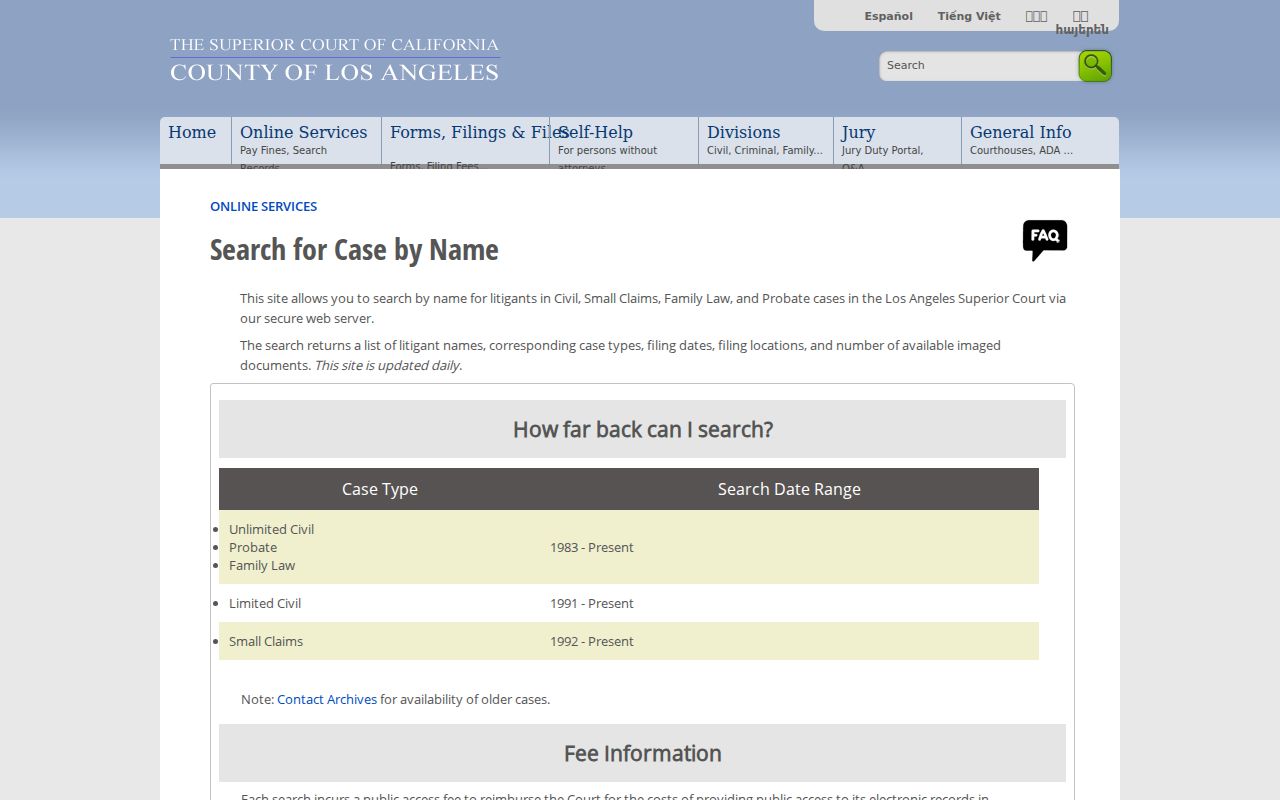
The Los Angeles Superior Court Find a Case gateway separates free case-number access from paid name workflows. Case Access and Case Calendar each use a case-number field. The party-name path covers civil, small claims, family, and probate matters. The criminal path searches by defendant name. Unlimited Civil, Probate, and Family coverage runs from 1983 to the present, Limited Civil from 1991 to the present, and Small Claims from 1992 to the present. The court's case-summary interface is the direct case-number fallback when a name search is not the right route.
| Case number | Enter the number for a free case summary or calendar route. |
|---|---|
| Party name | Use Exact Match for a surname such as Miyamoto, or Starts With for a stem such as Miya. |
| Defendant name | Criminal defendant workflow; online images are not available for criminal cases. |
| Returned fields | Litigant names, case type, filing date, filing location, and the number of available imaged documents. |
A guest name search costs $4.75. A registered path uses sliding fees, reported as $1 for the first 10 searches and then $4.75 to $4 based on volume. Payment comes before results and is nonrefundable even when there is no match. Guest results remain available for two hours. Civil images cost $1 per page for pages 1-5 and $0.40 per page after that, with a $40 document maximum; blank scanned pages count. Purchased documents remain accessible for 30 days. Criminal and family-law images are not online, so a public terminal, court clerk, or holding division may be the required fallback for a non-imaged file.
The LASC party-name index screenshot reflects the paid search surface. It is a result inventory, not a personal sample docket. Sealed or confidential matters, paternity and minor-related matters, specified family details, and restricted unlawful-detainer information may not appear.
Federal cases use a different system. The PACER service covers Central District of California dockets by party, case number, date, and court filters. Federal documents can be sealed or redacted, and the reported charge is $0.10 per page with a $3 document cap and a quarterly $30 waiver threshold.
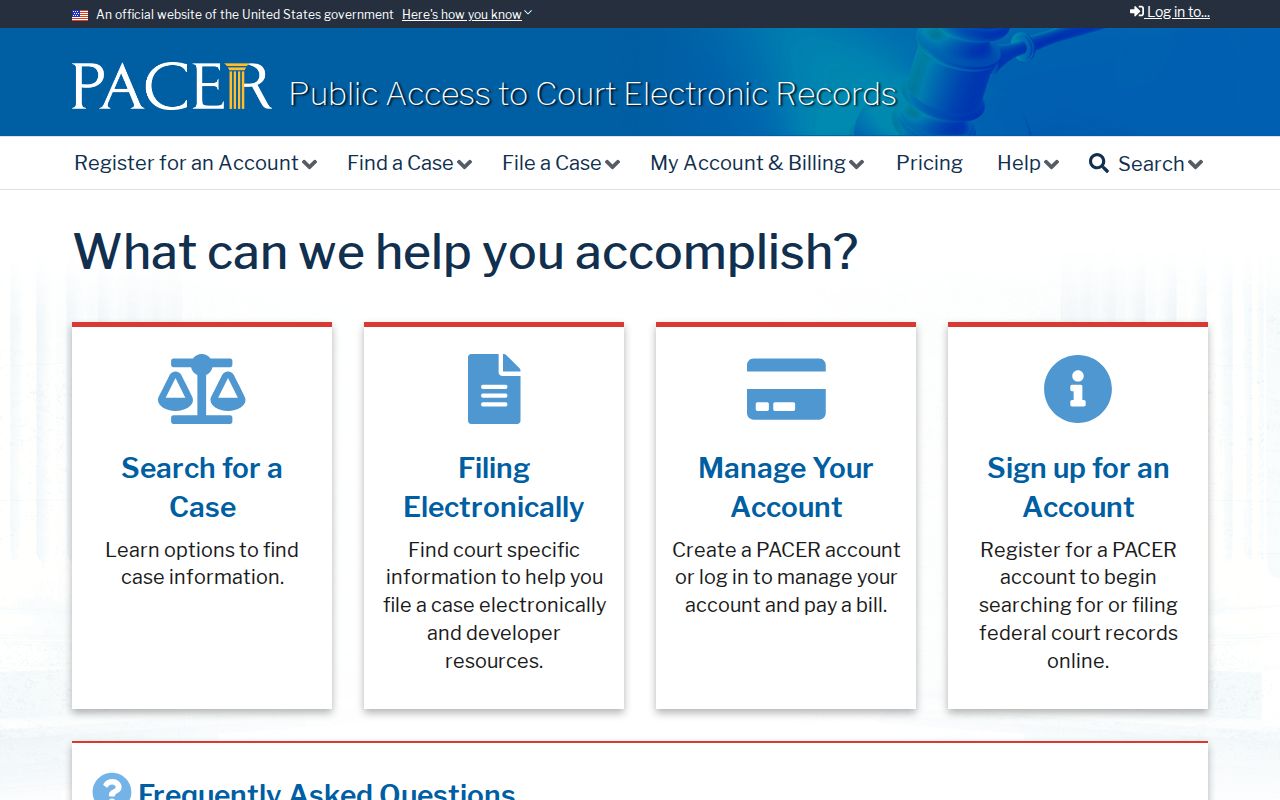
A state trial-court result and a federal docket should remain separate lines in the research record. Neither one, by itself, resolves identity or describes the outcome beyond the fields the custodian releases.
- Litigant names and the search mode used.
- Case type, filing date, and filing location.
- Case number and calendar or summary availability.
- Image count, access charge, and image restriction.
- The date the result was checked.
Vital Routes for a Lomita Resident
California uses informational and authorized certified copies rather than a single rule that makes every birth or death record unrestricted after a set number of years. LA County RR/CC may be the faster route for a Lomita event, while the California Department of Public Health, or CDPH, supplies statewide vital-record ordering. County and state requests use dedicated record-order channels, not an ordinary California Public Records Act request.
| Record | Application | 2026 state fee | Access distinction |
|---|---|---|---|
| Birth | VS 111; VS 20 when an authorized copy needs a sworn statement | $31 | Informational copy broadly available; authorized copy requires an eligible person |
| Death | VS 112; VS 20 where required | $26 | Informational and authorized routes differ |
| Public marriage | VS 113A | $19 | Identify both parties and the event; copy type controls access |
| Dissolution | VS 113B | $18 | CDPH certificate of record is not the full Superior Court case |
| Confidential marriage | County issuing office | $19 state schedule | Parties or a court order under the restricted route |
The 2026 fees above are state schedule figures from the research, not a promise about every county service charge. Authorized-copy applicants select a statutory relationship or role and submit a notarized sworn statement when required. An informational copy is marked that it is not a valid document to establish identity. Applications go by mail with a U.S.-bank check or money order payable to CDPH Vital Records; no cash. The fee is kept as a search fee when no record is found, and wrong or missing payment can cause a return.
Accepted mail orders are not cancelled or refunded and are sent by USPS First Class. For events before July 1905, county registers, the California State Archives, church or cemetery material, newspapers, and genealogy collections may be needed. A vital record confirms an event association. It does not establish a current Lomita address.
Lomita Voter Status Is Personal
My Voter Status is an authenticated self-lookup, not a public street-by-street resident roll. It can show registration status, party preference, vote-by-mail status, polling place or vote center information, and ballot or election information. It never reveals ballot choices. The form asks for personal matching data, so it is useful when the person is participating in the search, not when a researcher wants a public list.
- First and last name
- Registered identity fields used for the match.
- Date of birth
- Required identity detail in the form's matching flow.
- California DL or ID
- Conditional credential where applicable.
- Last four SSN digits
- Conditional alternative where a California DL or ID is not used.
- County
- Los Angeles is the county selection for Lomita.
California voter information can contain a name, residence or mailing address, birth date, party preference, registration date and status, precinct or district, registration history, and election-participation history. Elections Code §2194 limits voter-file use to election, scholarly, journalistic, political, or governmental purposes. Government Code §7924.000 protects home address, telephone, email, precinct, and prior registration details except for authorized release, and always protects a driver's license or ID number, Social Security number, unique identifier, and signature. Elections Code §18109 makes specified unauthorized use a misdemeanor.
The Secretary of State file-request route asks for requester and organization details, geography, data sought, qualifying purpose, delivery choice, and a certification under penalty of perjury. Fees vary by extract and delivery. A county subset may be requested through RR/CC at 12400 Imperial Highway, Norwalk, with the reported phone 800-815-2666. That is a regulated file request, not a public ZIP or block browse.
Lomita Resident Records: SOS and DCA
The California Secretary of State's business index and the Department of Consumer Affairs license search can connect a name to a public organization or credential, but they answer different questions. SOS bizfile searches entity name or number with type, status, location, and date modes. It can return formation, address, agent, officer, and filing details. DCA searches across boards by license type or number, business, first or last name, city, or county, with status and discipline links varying by board.
The SOS bizfile search should be read for entity role. The DCA license search should be read for license role. An owner, officer, agent, licensee, professional, or permit applicant is not automatically a resident at the public address. Lomita city licenses may require a request to the city Finance custodian when no public index is available.
The DCA result surface is useful for checking a license number, status, dates, public address, responsible board, and discipline links.
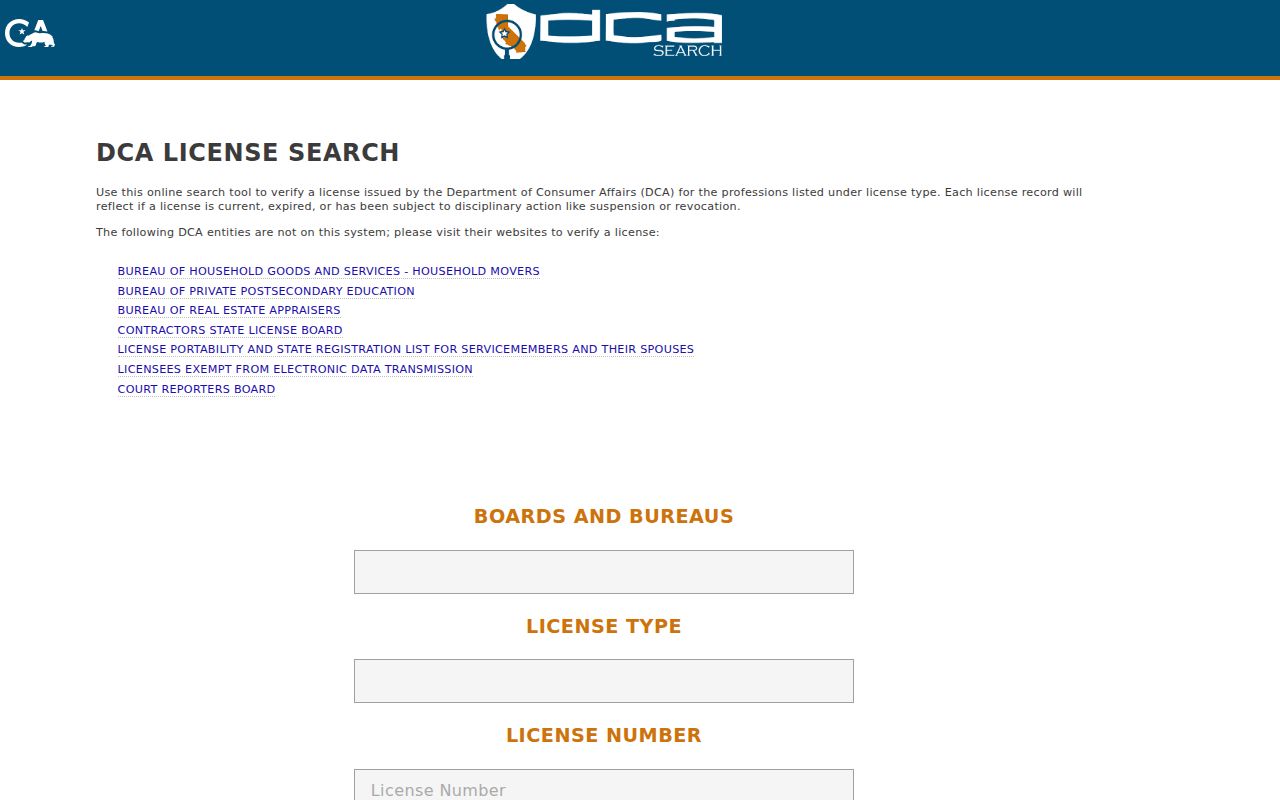
Keep the business name, filing role, license type, and date in separate fields when comparing a same-name person. This makes the match more precise and keeps a public business address from becoming an unsupported home address.
Lomita Birth-Relative Records
A family-history search can have a lawful human purpose without turning a public index into a contact list. California directs adoptees and birth relatives to the official Department of Social Services adoption-information process. The route belongs with CDSS, not a court-name search or a compiled people finder. Eligibility, consent, and confidential information controls matter more than a matching surname.
An heir trail follows a different order. Start with a death or obituary clue, then locate a public probate file for the decedent, petitioner, representative, or heirs. Compare that role with recorded documents and legal descriptions when title later changes. A probate heir, a deed grantee, and a directory subscriber are separate evidence roles. Older family work may also need the library's historical city directories, so the Lomita city directory collections can supply a dated lead before official verification.
The official CDSS adoption information route is the appropriate starting point for a birth-relative question. Preserve consent, dates, and source limits, and stop when the custodian indicates that a record is confidential.
Lomita Unclaimed Property Records
The State Controller's unclaimed-property search is a narrow identity clue. The official search can start with a last or business name and narrow by first name, city, or ZIP. A result connects a name to a holder and reported location, which can help separate same-name people or suggest where to look next. It does not prove a current residence, ownership, or entitlement without the claim process.
The California unclaimed-property search is free. A claim requires proof, and a matching name should be preserved as a lead rather than copied into a current resident record.
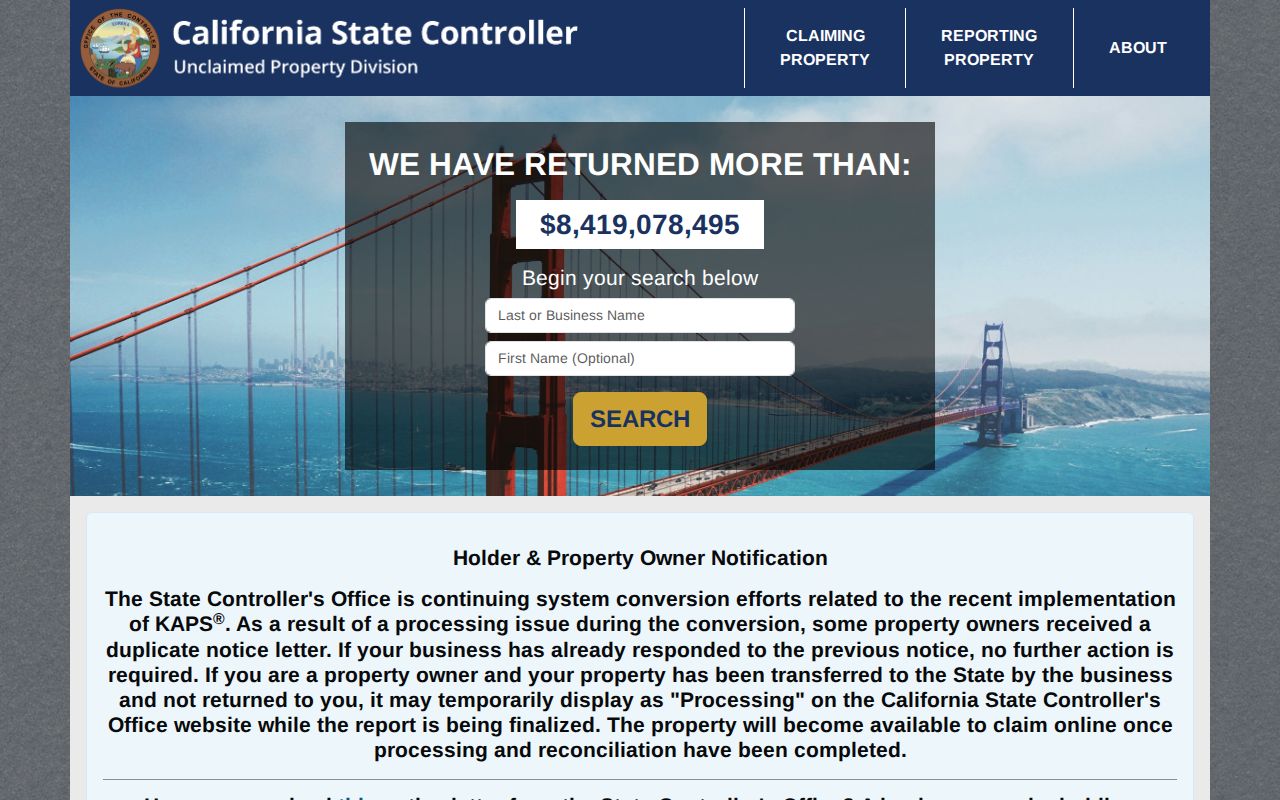
Compare the reported city or ZIP with a dated parcel, probate, license, or newspaper source. If the roles or dates do not align, report the conflict instead of treating the result as confirmation.
Privacy Programs Change a Lomita Resident Lookup
California's privacy controls can change what a search returns. The DROP platform under the DELETE Act opened for consumer requests on January 1, 2026. Registered brokers began processing requests on August 1, 2026, and must retrieve them at least every 45 days subject to exceptions. DROP applies to registered commercial data brokers. It does not erase government deeds, assessor rolls, court records, voter records, or vital records.
Safe at Home, under Government Code §§6205-6211, provides a substitute address, confidential voter registration, and limited deed or address protections for qualifying participants. The state's Safe at Home FAQ explains eligibility and service limits. A hidden address is not evidence that a person is absent. It is a sign to respect the custodian's confidentiality process. The comparison matters when the search seems to have an unexpected gap.
When no online result exists, use the California Public Records Act as a focused fallback for an identifiable existing file. The Lomita City Clerk request route accepts email, mail, or hand delivery. The city advises naming a document title or number, street address or property location, developer, and action date. Electronic copies are free; hard-copy printouts are $0.10 per page, billed in advance. Government Code §7922.535 ordinarily gives an agency 10 calendar days to determine whether it holds disclosable records, with a possible written extension of no more than 14 days. That is a determination deadline, not a guaranteed production date, and CPRA does not require an agency to create a new resident list or answer an open-ended research question.
A request should identify the person, record type, date range, and Lomita connection. Ask the custodian for the documented access route when a privacy law, sealed file, or confidential address blocks disclosure.
The DROP implementation page explains the separate broker workflow. Government records and privacy programs must remain separate lines in research notes.
Lawful Limits for a Lomita Resident Lookup
Use records for personal, lawful research such as family history, reconnecting through an official program, estate work, scam avoidance, or civic understanding. Penal Code §646.9 addresses stalking, CCP §527.6 provides a civil-harassment restraining-order route, and Penal Code §530.5 addresses unlawful use of another person's identifying information. Voter-data misuse carries its own restriction under Elections Code §18109.
Lawful use. A Lomita name search is not permission to stalk, harass, intimidate, or expose a protected person. Stop at the custodian's privacy boundary and use an official, consent-based route for sensitive family or adoption questions.
Before relying on a match, retain the source date, custodian, geographic scope, and exact role attached to the name. Confirm with two independent records when possible. If a conflict remains, state the conflict and let the office that holds the record decide what can be corrected or released.