
Sources Behind Lomita Previous Residents
Previous residents of a Lomita address appear in different records because each source captures a different role. The recorder follows a recorded instrument and its parties. An assessor parcel supplies land identity and current assessment clues. A cross-cross directory follows a listed subscriber or occupant. A census schedule captures a household at one enumeration date. City permits date construction and alterations. The era table keeps those roles apart while showing where a backward house-history search can begin.
| Source | Years It Covers | Where Held | What It Shows |
|---|---|---|---|
| RR/CC real-estate records | 1851-present; 1851-1957 lower level, 1958-present second floor | Los Angeles County RR/CC, Norwalk | Recorded instruments, indexed parties, and the ownership trail |
| Haines cross-cross directories | 1981, 1983-1986, 1988-1992 listed runs | LA County Library Californiana, Norwalk | Listed occupant or subscriber by street and number |
| Pacific Bell address and phone | June 1988; December 1990, 1991, 1992 | LA County Library Californiana | Dated subscriber and telephone snapshot |
| South Bay YP/WP | 2001-02, 2003, 2004-05, 2005, 2006, 2008, 2009 | LA County Library Californiana | Business and residential phone listings as each volume provides |
| Federal census | Released schedules through 1950 under the 72-year rule | NARA and authorized genealogy access | Household members, ages, relationships, and occupations at census date |
| Lomita municipal and permit files | Principally post-incorporation, 1964-present | City Hall, GeoCivix, or CPRA request | Construction, alteration, applicant, contractor, and inspection clues |
| Historical photos and newspapers | Especially the pre-1980 photo project; newspaper dates vary | Lomita Library and Historical Society | People, events, obituaries, captions, and address context |
| Sanborn maps | No verified Lomita sheet run located | Check LOC, LAPL, or Californiana | Footprint, use, and fire-construction evidence if a sheet exists |
Start with the source that matches the question. For ownership, go from the current AIN to the recorder. For occupancy, use an exact directory year or released census. For a structure, use permits and aerial evidence. For a death or family endpoint, use newspapers, probate, or the official family-history route. The record trail is not one uninterrupted list, and the missing years in the table are evidence gaps, not permission to assume continuity.
Lomita Property Records Split the Trail
Los Angeles County real-estate records reach back to 1851 for the verified local property trail. The physical index has an important break: 1851-1957 is viewed on the lower level, while 1958-present is on the second floor. There is no public Internet deed-search index. The in-office search uses a grantor or grantee name with a recording year, and telephone index searches are not accepted. That design makes a current address a starting clue, not the recorder's search key.
Access remains possible through several channels. The RR/CC real-estate request page routes recorded-property copies online through LexisNexis, by mail to the Real Estate Records Section at P.O. Box 1130, Norwalk, CA 90651-1130, or in person in Room 2207. Online orders are processed within 20 working days. The reported plain-copy fee is $5 for the first page and $3 for each added page; certified copies are $6 plus $3 per added page, and a card or mobile-wallet service charge is $1.75. The county's recorder fee schedule is the place to recheck current payment details. A request should identify the indexed name, recording year, document title, or document number instead of asking the county to search by street address.
The RR/CC viewing instructions show why the archive's physical arrangement matters when a house history crosses the 1958 line.
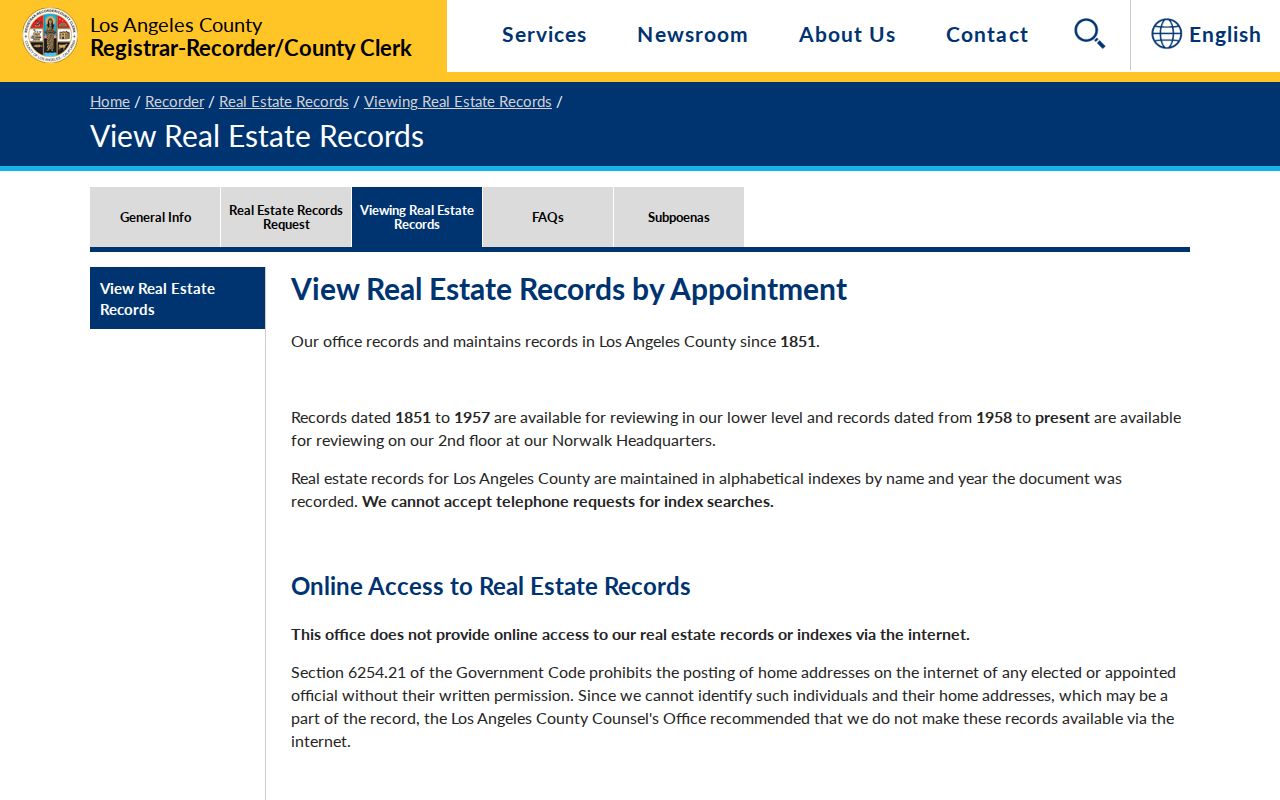
The image points to the county's viewing channel rather than a searchable online resident roll. A researcher should plan the visit or request around the name-and-year index and keep the two floor periods visible in notes.
Lomita Previous Residents and Deed Chains
The strongest ownership trail begins with an address but does not stay there. The Los Angeles County Assessor Portal accepts a ten-digit AIN or situs address and can return parcel facts, a legal description, map information, values, characteristics, and transfer clues. Online owner-name search is not advertised. Owner information can be requested for a specific parcel through the district's phone, office, or contact route. Carry that specific name and a likely acquisition year to the RR/CC index.
- Enter the Lomita situs address in the Assessor Portal. If the address fails, try cross streets or Map Search and record the ten-digit AIN.
- Request the current owner for that specific AIN, keeping the tax-mailing address separate from the situs address.
- Search the RR/CC grantor-grantee index for the owner as grantee in the likely recording year. Identify the acquisition instrument and its seller.
- Search that seller as grantee in earlier years. Repeat the name-and-year search, using the legal description to test whether the land is the same.
- For earlier periods, move between the recorder floors or use the county's documented copy channels. Never describe an uninspected year as a continuous chain.
The RR/CC indexing notice confirms the central limitation: real-estate records are not maintained by street address or APN. That is why the address-to-AIN-to-owner bridge is essential for a past-resident search.
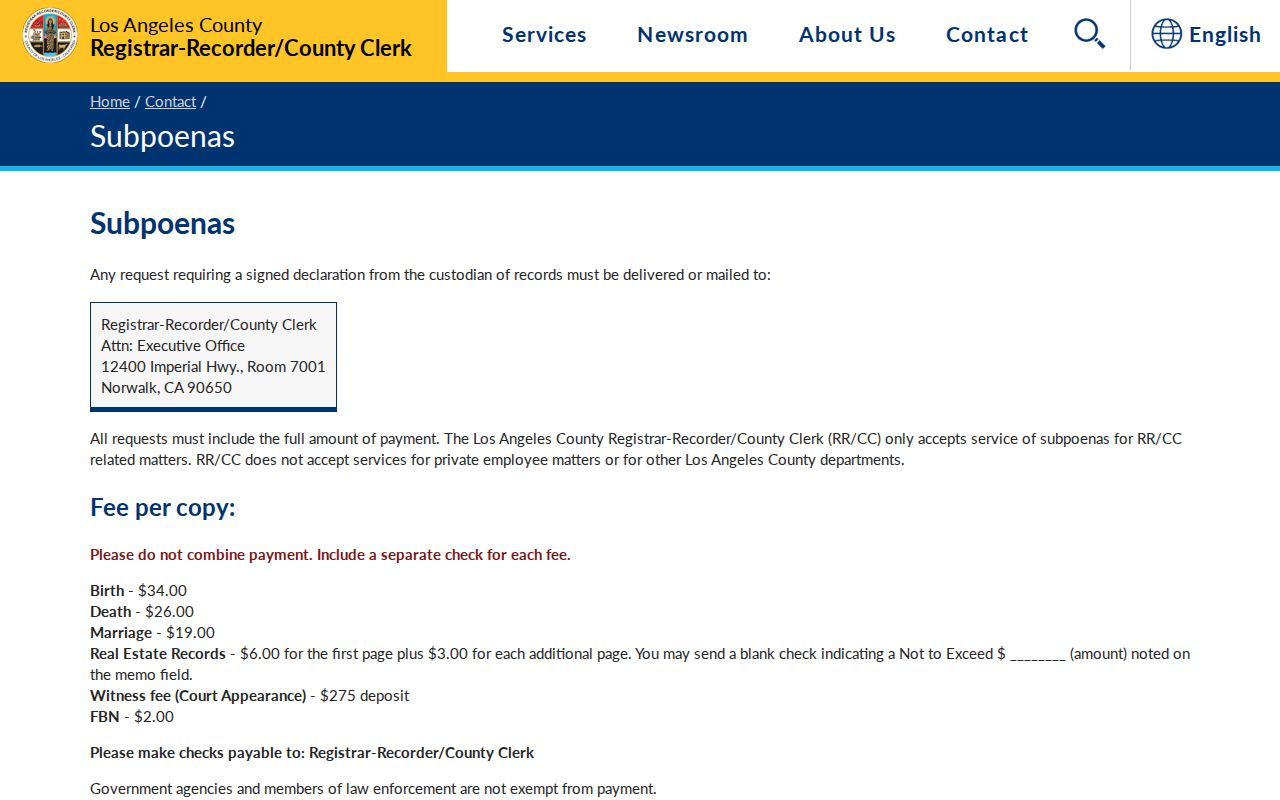
The indexing warning keeps the chain honest. A deed may name a grantor, grantee, trust, or representative, but it does not by itself prove who occupied the parcel.
- Grantor
- The party transferring an interest in the recorded instrument.
- Grantee
- The party receiving the interest in that instrument. Searching a prior seller as grantee can reveal an earlier purchase.
- Chain of title
- A dated sequence of recorded transfers that connects one ownership interest to earlier interests.
- Legal description
- The lot, block, tract, or other land description that can remain stable when a street name, number, or postal line changes.
Lomita Past Residents in the Oil Era
Lomita's local history changes how an old deed should be read. Before incorporation, land evidence followed Los Angeles County and the rancho and subdivision context rather than a modern city clerk. In 1907 W.I. Hollingsworth bought and subdivided a seven-square-mile colony. Lomita incorporated on June 30, 1964 after annexation pressure reduced the original community footprint. A deed or directory entry from before 1964 can therefore describe the historical locality without falling inside today's 1.91-square-mile city.
The 1923 oil boom is a useful story marker for property research. Reported lot values rose from about $300-$400 to as much as $35,000, and roughly 500 acres moved into oil use. Deed, mineral, and lease instruments from that period may reflect land use that looks unlike a later residential chain. Exact instrument counts are not verified, so the oil era should guide a search for names, legal descriptions, and dates, not support a made-up transaction total.
Search terms can also change with the era. Grower, truck farmer, well worker, driller, or a company name may distinguish a same-name party in an old index. Treat those words as clues. The parcel description, recording reference, and dated instrument carry more weight than a modern street label.
Lomita Directory Gaps Need Dates
Directory evidence supplies the occupant layer that deeds lack, but the Lomita runs are irregular. Haines volumes list Los Angeles South Suburban Cross-Cross editions for 1981, 1983-1986, and 1988, followed by Los Angeles County South Coast Cross-Cross editions for 1989, 1990, and 1992. Pacific Bell adds a June 1988 South Bay Address and Phone Directory and December 1990, 1991, and 1992 volumes. The South Bay YP/WP run includes 2001-02, 2003, 2004-05, 2005, 2006, 2008, and 2009.
The exact collections and their closed-stack setting are described on the Lomita city directory collections page. For a past-occupant search, the key rule is narrower: compare the next available edition without filling a missing year. A cross-cross listing identifies a listed occupant or telephone subscriber, not automatically the deed owner. A business or residential entry can also reflect a different role than the person named in a probate or vital record.
No verified local Sanborn sheet run or dated street-renumbering table was located. If an old house number fails, bridge it with the legal description, tract, cross streets, maps, aerials, and a same-name check. Mark the connection as an inference until a custodian or original volume supports it.
Lomita Directories and Released Census
A directory is an annual or periodic snapshot. A federal census is a household snapshot taken on its enumeration date, and the two should not be blended into a single undated list. Under the 72-year rule, 1950 is the latest released federal census as of 2026. The 1980 cross-cross neighborhood evidence can be paired only with the permitted aggregate or household archival access level, not an assumed public individual schedule.
Use the California State Archives catalog and access information when the search moves beyond a local directory or requires an archival finding aid.
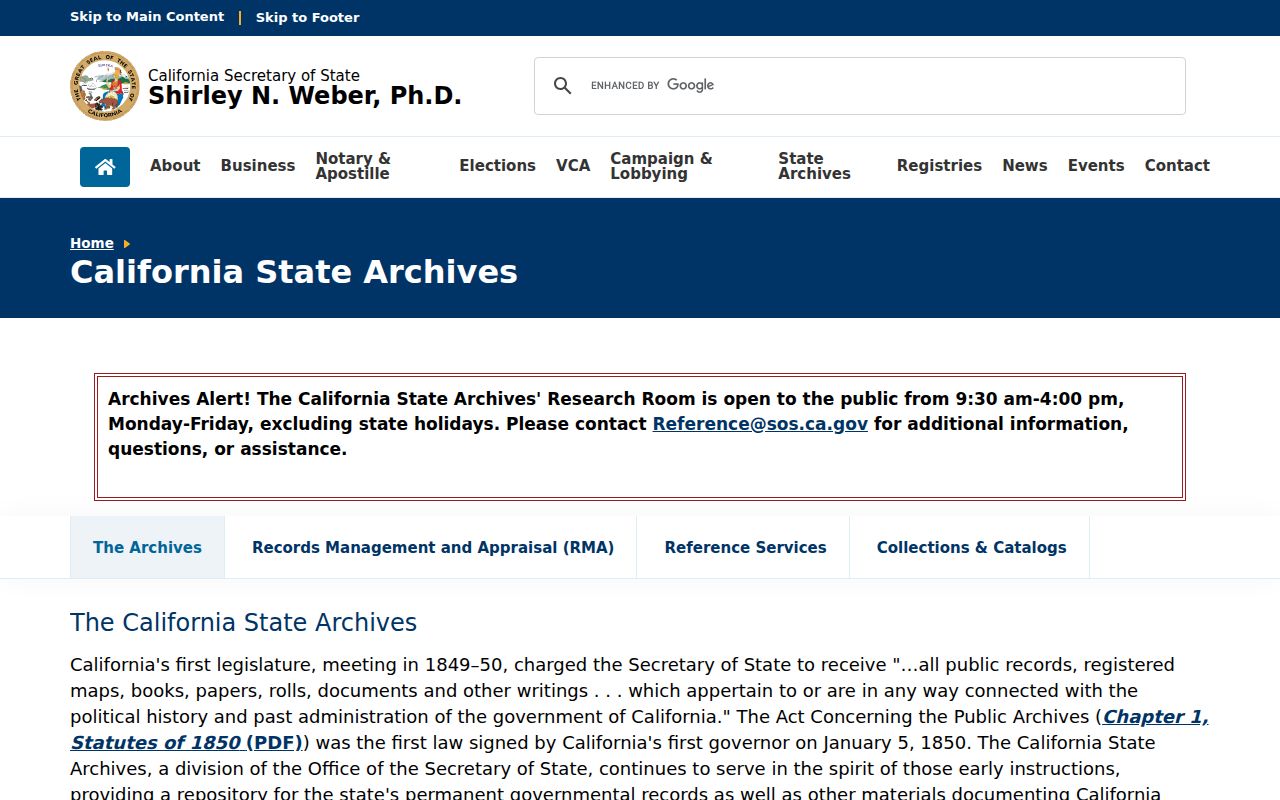
The archive route is a fallback for maps, government series, photographs, and family-history material. It does not turn an unreleased census schedule into an open address roster.
- Choose the exact Haines, Pacific Bell, or South Bay volume closest to the target year and browse the street, number, and printed entry.
- Record the name, telephone, business or occupation wording, and any abbreviation exactly as printed. Do not silently expand a short name.
- Compare the next available directory edition. If the next volume is several years away, label the interval instead of assigning the same household to every missing year.
- Pair older entries with the released census or another dated official source. Use ages, relationships, and place clues to test identity, then preserve conflicts in the notes.
Lomita Residents in Photo History
The 2019 Lomita Photo History Project scanned resident-held pre-1980 photographs and documents about people, places, events, and daily life. Contributors kept their originals, while digital copies could be contributed to History.LACountyLibrary.org. Captions, donor names, street references, and event dates can bridge a directory gap, but the project is a community archive rather than a complete name index. Ask for the image context and donor metadata before treating a caption as proof of residence.
The Los Angeles County Library account of the scanning day is the source for the project details. The Lomita Library itself began in June 1914 in a clubhouse with 232 books and 14 cardholders. It later moved to the Smith Building storefront in 1918, a new building in 1928, the former Pioneer Press building in 1960, and the civic-center site dedicated April 10, 1976. Those dates explain why local research may be distributed across branch, newspaper, and society materials.
A photograph can show that a person, place, or event was recorded in a local context. It cannot by itself establish title, a full household, or continuous occupancy. Pair it with a dated directory, deed, newspaper item, permit, or probate record.
Lomita Records: Libraries and Archives
When a portal fails, the local library is the practical first stop. Lomita Library, at 24200 Narbonne, offers telephone and in-person research help, photocopying, a catalog, databases, Los Angeles Times access through ProQuest, and Daily Breeze access through NewsBank. Call 310-539-4515 with the exact street, target years, and the title of the collection sought. A precise request works better than a general request for old residents.
The LA County Library Californiana Collection is at Norwalk, 12350 Imperial Highway, with closed stacks. Its holdings include more than 24,000 books, more than 200 magazine and newspaper titles, California census schedules from 1850-1910, the Los Angeles Star from 1851-1879, city directories, and official histories. Call or use reference service before traveling, because the required volume may not be an open shelf item. The Lomita Historical Society, founded in 1974, preserves more than a century of Lomita-area information and can be contacted at P.O. Box 1393, Lomita, CA 90717, 310-539-0733, or lomitahistoryproject@yahoo.com.
City records offer another channel. The Lomita City Clerk public-records page accepts a focused CPRA request by email, mail, or hand delivery; electronic copies are free and paper copies cost $0.10 per page in advance. Use the address, project or permit title, developer, and approximate Council or Planning Commission date. Lomita Building and Safety uses GeoCivix for plan submission, payment, comments, status, revisions, permits, and inspections, with a counter and request route for older or transferred county files. The municipal series principally begins after incorporation, so earlier material may remain a county or archive question.
Lomita Records, Obituaries, and Probate
Obituaries and probate can explain why an address trail ends or changes hands. The Lomita Library databases support searches in the Los Angeles Times and Daily Breeze. Search a name with the street, an obituary term, a marriage announcement, school activity, business opening, or property event. Record the issue, date, page, and whether the item is news, a paid notice, or an advertisement. A newspaper relationship is a lead that still needs corroboration.
For an estate endpoint, the Los Angeles Superior Court party index covers public civil, family, probate, and small-claims material through the portal's stated periods. Name searches are paid, while case-number access is a separate route. Sealed, confidential, minor-related, and specified family details may be excluded. A probate file can identify a decedent, petitioner, representative, or heir when public, but it does not turn every named relative into a former occupant.
Use the Los Angeles Superior Court Civil Index or the clerk and holding division when a public probate lead needs confirmation. Then compare the estate date with the deed chain, directory entry, and legal description. No verified Lomita-specific obituary index was located, so the library and society remain the documented fallback.
Lomita Previous Residents and Family History
A house-history search can end in a family question rather than a property question. California directs adoptees and birth relatives to the Department of Social Services official adoption-information process. That route is distinct from a directory, deed, or census search and has its own confidentiality rules.
The California adoptee information page identifies the official family-history channel for that kind of request.
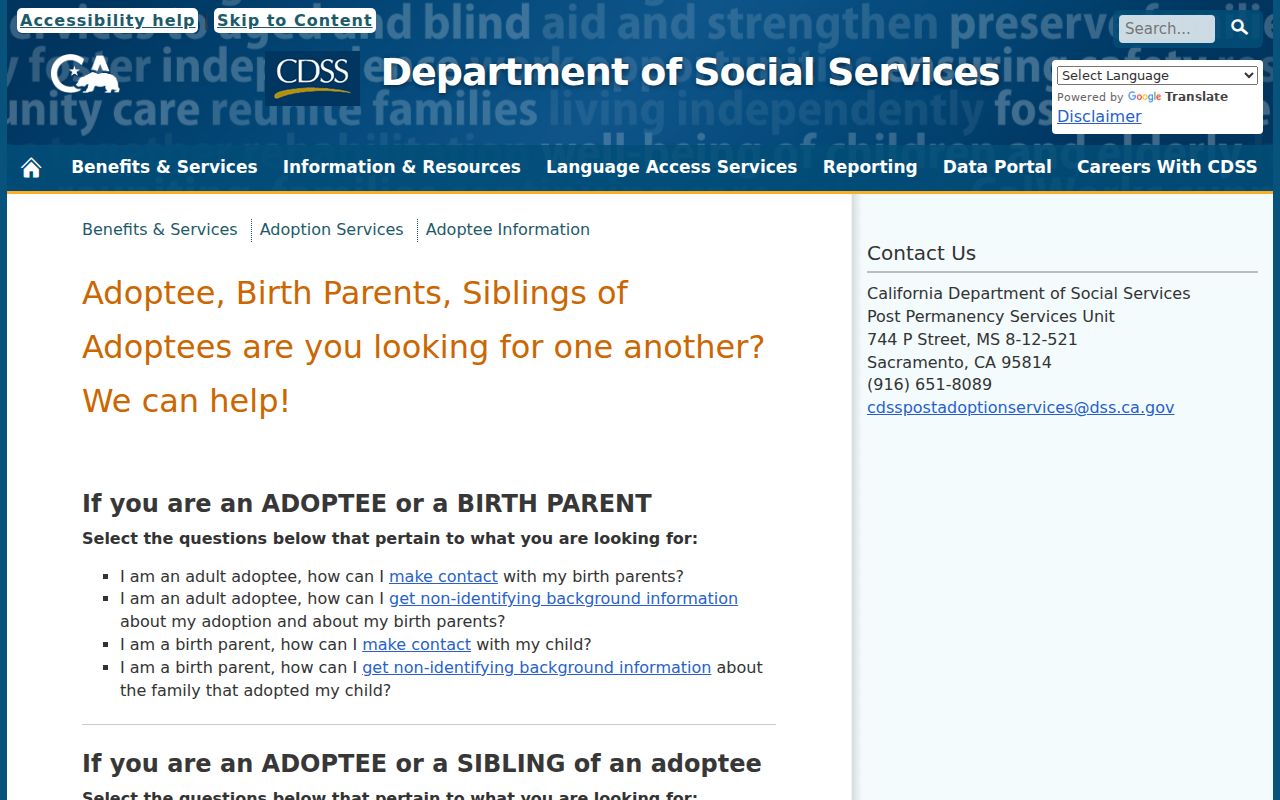
The image belongs to the official adoption-information source, not to a public Lomita resident index. It is useful when a house-history lead needs a lawful family-record endpoint rather than another address search.
A sound past-resident trail labels each role precisely: owner, tax-mail recipient, telephone subscriber, listed occupant, court party, permit applicant, decedent, representative, or heir. Two independent records with overlapping dates and geography are stronger than one attractive match. If the records disagree, keep the conflict visible and ask the custodian for an existing file or index. The California Public Records Act can retrieve an identifiable record, but it does not require an agency to create a household list or solve a genealogy question.
Lawful house history. Previous-resident research is appropriate for family history, a home's documented past, and personal curiosity. Do not use names, addresses, or dated listings to stalk, harass, or harm a living person.