
Start a Lomita Residents Directory Search
Lomita sits inside Los Angeles County as an incorporated city, so the right first office depends on the question you bring. The City Clerk keeps municipal files, permits, planning material, council records, and the public-record request route. The county, meanwhile, holds property, tax, recorded-document, court, and vital-record systems. California adds voter-status, license, business, unclaimed-property, and archival paths. A name points one way. A street address points another. A historical year points somewhere else entirely.
Treat a residents directory as a dated evidence trail rather than a single list. The assessor links an address to a parcel and its assessment record. A recorder entry names the parties to an instrument. A directory volume may show a telephone subscriber or a person listed at a house. Voter status authenticates one individual, while court, vital, license, and probate records answer narrower questions. No single source proves every person who ever lived at an address.
- Define the role you need. Write down whether the goal is an owner, a listed subscriber, a registered voter match, a court party, a family-history lead, or a municipal project contact.
- Start with the Los Angeles County Assessor Portal when an address is known. Use its address or parcel modes to obtain the parcel key and map context.
- Use Lomita's Street & Parcel Map and cross streets when a unit, corner, commercial site, or new development does not resolve cleanly in the assessor search.
- Carry a specific parcel and likely owner name to the Los Angeles County Registrar-Recorder/County Clerk. Its real-estate index is organized by grantor or grantee name and recording year, not by street address.
- Run My Voter Status only as an authenticated personal check, or use the statutory voter-file request route when an approved election, scholarly, journalistic, political, or governmental purpose applies.
- Use the Los Angeles Superior Court party index, vital-record custodian, Secretary of State business search, Department of Consumer Affairs license search, or State Controller unclaimed-property search for the narrower record question.
- When no portal supplies the needed field, ask the custodian for an identifiable record, contact the library or archives, or file a focused California Public Records Act request. Save the source, date, and geographic scope with every result.
Where Lomita Resident Records Are Kept
Los Angeles County is the decisive records geography for Lomita. The Registrar-Recorder/County Clerk holds recorded property instruments and county vital records. The Assessor keeps parcel and assessment information. California's Secretary of State runs the individual voter-status service and controls the voter-file request process. Lomita's own Clerk and Building & Safety divisions supply the municipal layer for permits, planning actions, council material, and city-held project files.
Los Angeles County RR/CC
Real Estate Records
Norwalk, California
800-201-8999
Recorded-document requests
Los Angeles County Assessor
Assessor Portal
Specific parcel requests
Portal, phone, or counter
Address and AIN search
California Secretary of State
My Voter Status
Authenticated individual match
Purpose limits apply
Voter-status lookup
The Lomita City Clerk accepts focused requests by email, mail, or hand delivery. Electronic copies are free. Paper copies run $0.10 per page, billed in advance. The office sits at 24300 Narbonne Avenue, Lomita, California, reachable at 310-325-7110, open Monday through Thursday from 7:30 a.m. to 5:30 p.m. and every other Friday from 8 a.m. to 5 p.m. The Building & Safety Division handles plans, permits, inspections, and transferred county files through GeoCivix, with a counter, email, and phone route.
Ask the custodian that owns the record instead of pushing one office to build a new resident list. The county recorder, assessor, court, elections, and vital-record systems share no single index. City files can fill a project or address gap. For older directories, newspapers, and census material, the library and archives remain the practical route.
Convert a Lomita Address into an AIN
A Lomita search often starts with a street address. That search begins best at the Los Angeles County Assessor Portal. It ties the situs address to a ten-digit Assessor Identification Number. It also links parcel characteristics, legal-description clues, assessment information, transfer clues, and a map. The portal is free to use. Its public pages do not advertise a general owner-name search, though. That makes the address the bridge into the rest of the record trail.
The Assessor Portal entry in the Lomita source inventory shows the address and parcel entry point. Use the map when a house number resists matching or when adjacent parcels matter.
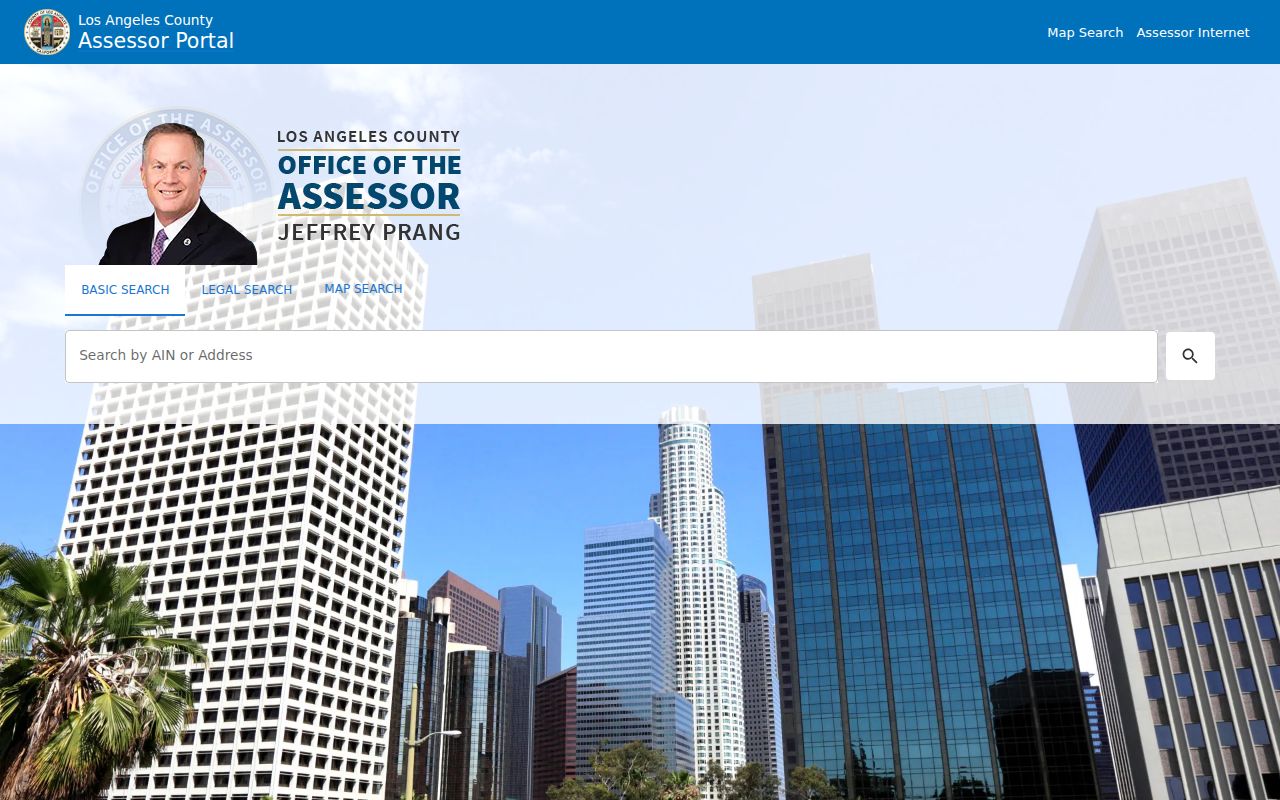
The result is parcel evidence, not a household list. Owner information for a specific parcel can be supplied by the Assessor through phone, counter, or contact form. Bulk data is a separate Property Data Sales product. Failed searches are common with multi-unit, commercial, corner, or new-development addresses. Cross streets and the map can pin down the correct AIN. This works without guessing at a unit or lot.
| Portal mode | Control | Use in a Lomita search |
|---|---|---|
| Basic Search | Tab | Primary entry into the public property search. |
| Search by AIN or Address | Autocomplete text | Accepts a ten-digit AIN or a situs address. |
| Legal Search | Tab | Uses the legal-description path; dynamic subfields were not fully captured. |
| Map Search | Tab or link | Browses mapped parcels and helps resolve cross-street questions. |
Keep the AIN, legal description, effective date, and map context with the result. Those details let a later owner request or recorder search refer to the same land, even when a postal line, unit label, or street spelling changes.
Why Lomita Deeds Need a Name Search
Los Angeles County real-estate records carry a useful limitation. The RR/CC does not maintain the deed index by street address or APN. There is no public Internet deed-search portal. The in-office index works from a grantor or grantee name paired with a recording year. The RR/CC request page cites an 1850 starting point. The local coverage table treats 1851 onward as the verified archive run.
The recorded-document request page shows the official route for copies and the county's long coverage. It belongs after the assessor step. The recorder's index needs a person name and year rather than a modern street key.
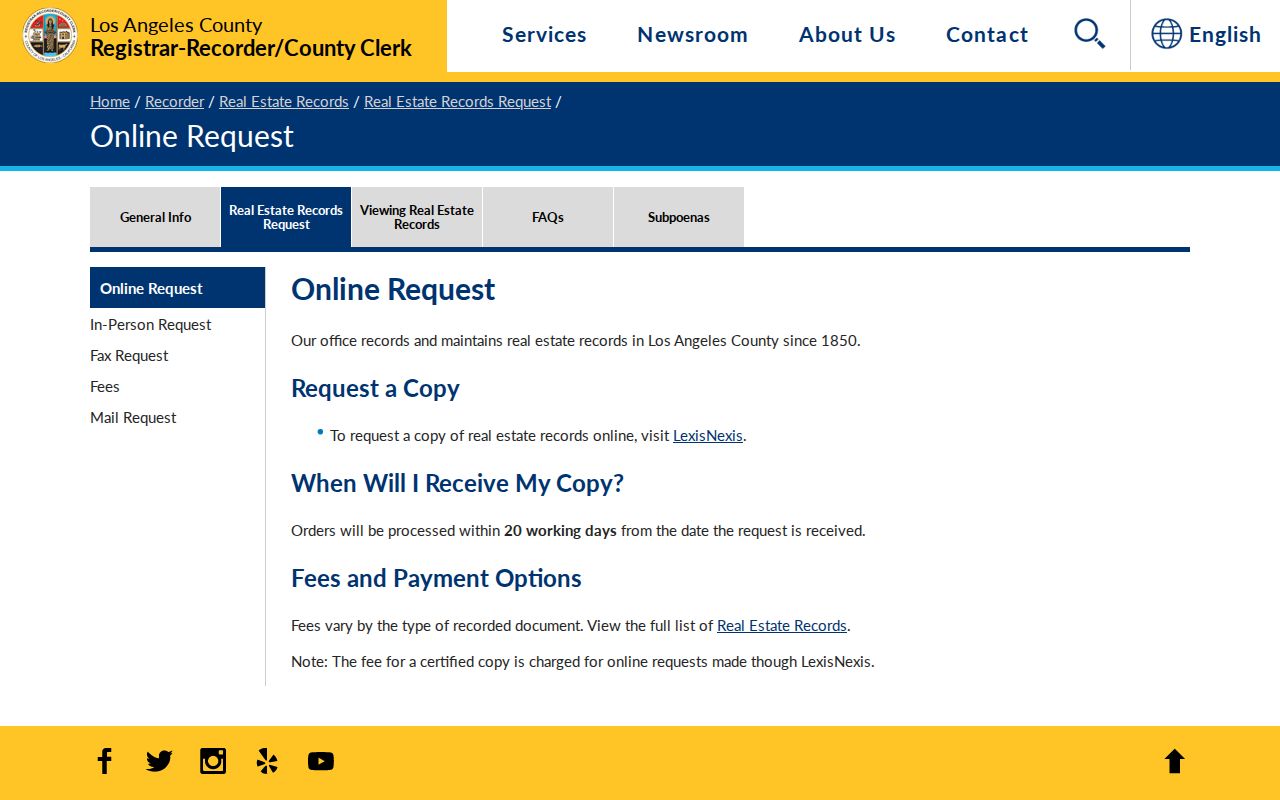
In-person researchers head to Room 2207 in Norwalk, where the annual index sits. Books from 1851 through 1957 are shelved on the lower level. The 1958-to-present material is on the second floor. The recorder takes no index requests by phone. Copies move three ways. Choose the RR/CC-linked LexisNexis service, mail to the Real Estate Records Section in Norwalk, or the counter. Online orders finish within 20 working days. Full documents are sold, not selected pages. A plain copy runs $5 for the first page plus $3 per additional page. A certified copy is $6 plus $3 per page. Card and wallet payments add a $1.75 charge.
The chain works through names and legal descriptions. It never works through a street typed into the recorder system. Start with the current owner as grantee in the likely acquisition year. Read the deed for the grantor, the recording reference, and the legal description. Search that grantor as a grantee in an earlier year next. The chain builds backward from there. The county's viewing instructions walk through the in-office route.
Note: A recorded party is evidence of an instrument, not proof that the named person lived at the parcel.
Current Lomita Resident Directory Sources
Lomita has no single current roll of everyone in town. Each record answers a different question. The assessor starts from land, the recorder names parties to recorded instruments, and My Voter Status authenticates one voter. City files show projects and permits. Nothing merges cleanly. Business, license, and unclaimed-property indexes create leads, though each needs a second record before it stands as proof a person lives at a Lomita address.
| Source | Role shown | Official keeper | Access path |
|---|---|---|---|
| Assessor parcel and assessment | Owner clues, situs, legal description, values, characteristics, map | Los Angeles County Assessor | Free address or AIN search; specific-owner contact route |
| My Voter Status | One person's registration status, party, vote-by-mail, polling, and districts | California Secretary of State | Free authenticated match; voter-file use is restricted |
| RR/CC recorded index | Parties, instrument type, recording date, and document reference | Los Angeles County RR/CC | Norwalk name-and-year index; copy request by online, mail, or counter route |
| Lomita city files | Permits, inspections, planning actions, council material, applicants | City Clerk and Building & Safety | Web archives, GeoCivix, email, mail, hand delivery, or counter request |
| Business, license, and property claims | Agents, licensees, entities, and reported holders | California SOS, DCA, and State Controller | Official name searches; confirm the role and date |
Check the delivery line first. The USPS ZIP Code Lookup verifies the delivery line attached to a Lomita address before any postal clue is weighed against a city boundary or parcel record.
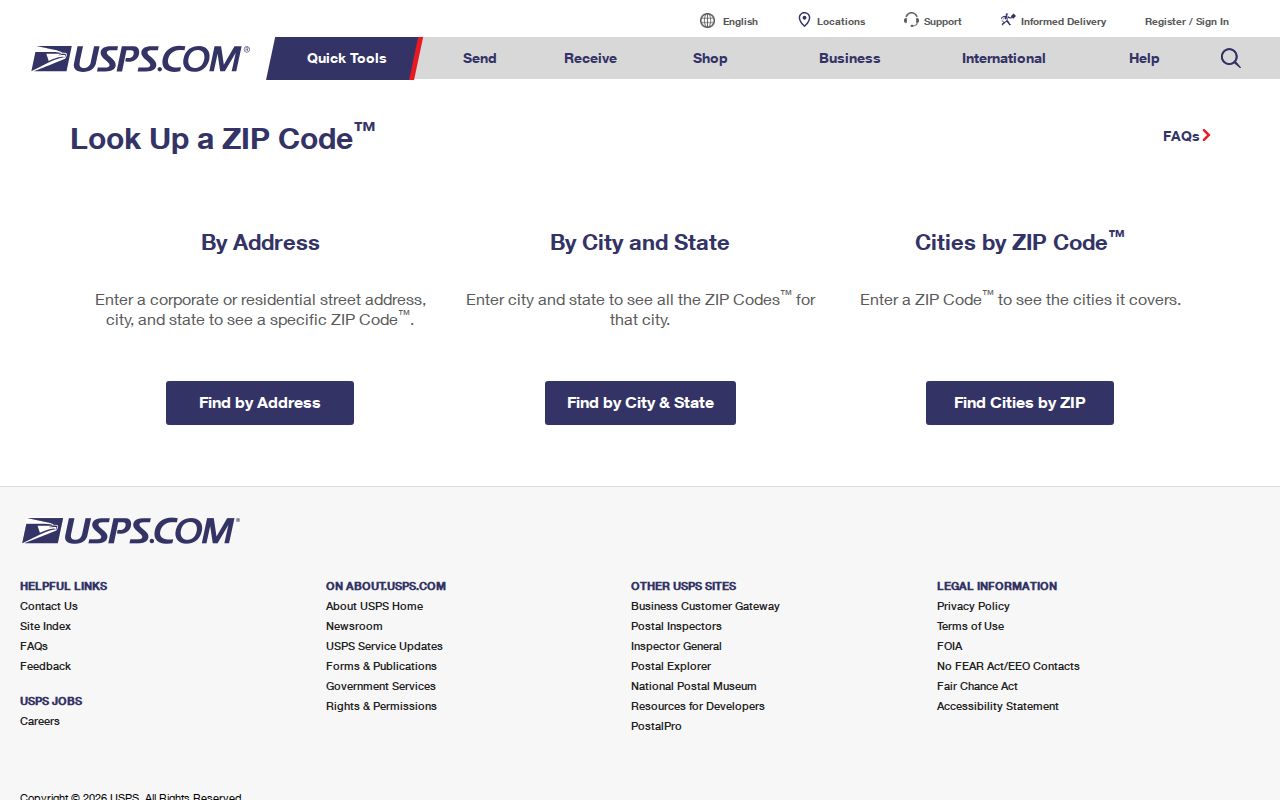
The USPS answer settles a mail-routing question only. It builds no ZIP-wide resident list. Nor does it replace the assessor, recorder, court, or city custodian.
The table separates access from meaning. A current assessor owner may be an absentee owner. A tax-mailing address may not be the situs. Directory subscribers move, and a business agent may not live in Lomita at all. A court party is tied to a case, not to any finding of wrongdoing. A strong Lomita residents directory search keeps those labels intact and compares dates instead of merging everything into one undated household claim.
What California Voter Status Can Confirm
My Voter Status checks one person at a time. It is a personal match, never a public street-by-street list of Lomita voters. The service shows registration status and party preference. It also shows vote-by-mail status, polling place or vote-center information, districts, and ballot or election information. It never shows how someone voted. Expect a first name, last name, and birth date. Where needed, the form also takes a California driver license or ID number. It may take the last four digits of a Social Security number instead. The California voter-status page in the Lomita source inventory marks that boundary.
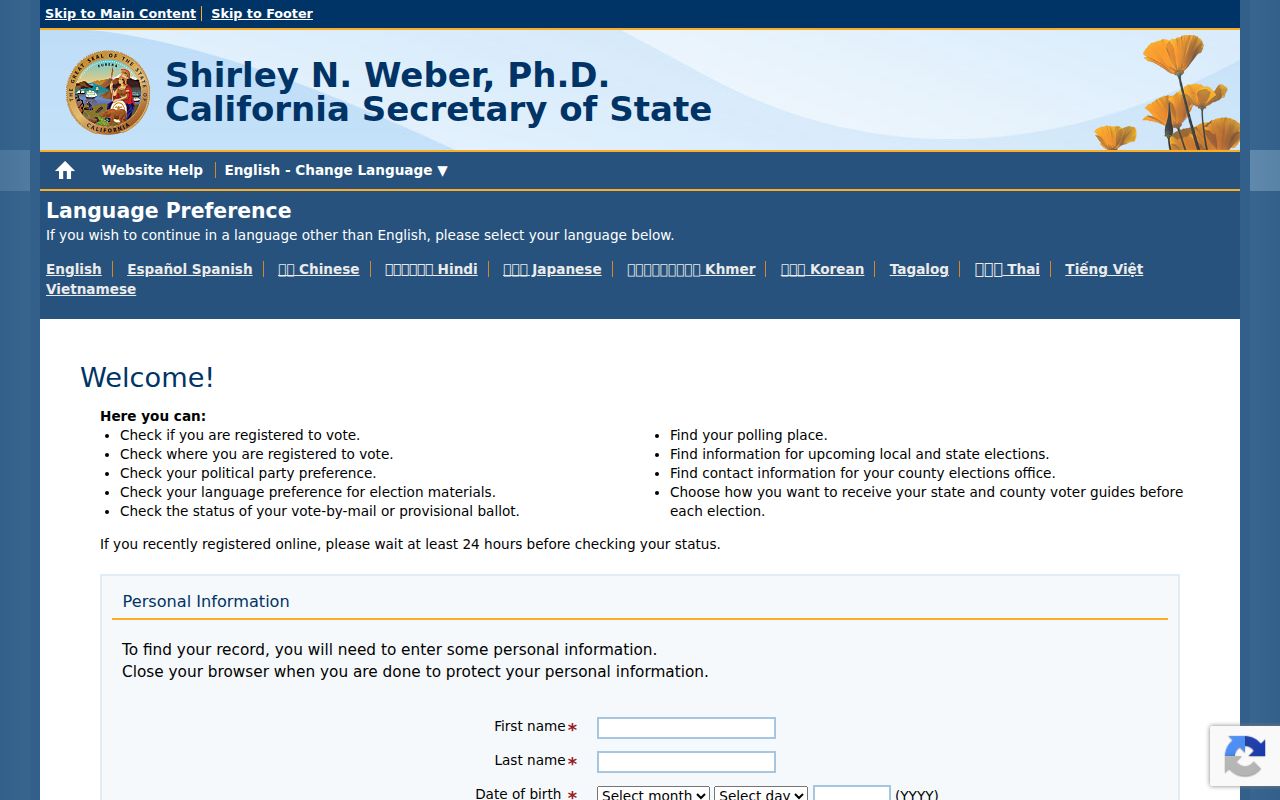
Voter-registration information is purpose-restricted under Elections Code §2194. Election, scholarly, journalistic, political, and governmental purposes are the listed lanes for registration-file use. Government Code §7924.000 protects home address, telephone, email, precinct, and prior registration except for authorized release, while driver-license, Social Security, unique-identifier, and signature fields remain confidential. Elections Code §18109 makes specified unauthorized use a misdemeanor and allows a fine up to $50,000. A Safe at Home participant may use a substitute address and confidential voter registration.
For an approved file request, the Secretary of State asks for requester and organization details, geographic scope, the data sought, intended purpose, responsible person, delivery information, and a certification under penalty of perjury. County subsets may be requested through the RR/CC in Norwalk. That process is different from the free individual status check, and neither should be presented as a public Lomita resident roll.
Note: My Voter Status authenticates one person; it does not disclose every registered voter who may be associated with a Lomita street.
Match Lomita Names to Official Records
A name search gets stronger when the record type matches the question. The Los Angeles Superior Court case gateway offers free case-number and calendar paths, and its party-name index covers Unlimited Civil, Probate, and Family matters from 1983 forward. Limited Civil coverage starts in 1991. Small Claims starts in 1992. Party-name searches are paid, and payment is due before results even when nothing matches. Guest searches run $4.75. Registered accounts use a sliding fee schedule.
Returned fields include litigant names, case type, filing date, filing location, and the number of available imaged documents, while case-number summaries are free. Civil images cost $1 per page for pages one through five, then $0.40 per page up to a $40 cap per document. Criminal and family-law images are not online. Sealed matters, paternity and minor-related matters, and specified family details are excluded, and public terminals, the court clerk, and the holding division remain fallbacks for files that are not imaged.
Vital records answer event questions, not present-address questions. Los Angeles County RR/CC and the California Department of Public Health issue birth, death, and marriage records through dedicated ordering channels. California separates informational copies from authorized identity copies. Birth and death copies require an eligible relationship and, when required, a notarized sworn statement. County routes may be faster for a Lomita event. Divorce files live with the Superior Court. CDPH can supply a certificate of record for specified years, but not the full decree.
- Birth record
- CDPH or county custodian; informational copy broadly available, authorized copy limited by Health & Safety Code §§103526 and 103526.5; 2026 state fee listed as $31.
- Death record
- CDPH or county custodian; informational and authorized routes differ; 2026 state fee listed as $26.
- Public marriage
- RR/CC or CDPH route using both parties and the event date; 2026 state fee listed as $19.
- Dissolution certificate
- CDPH certificate of record is not the Superior Court decree or full case file; 2026 state fee listed as $18.
The vital-records forms carry their own numbers. Birth applications use VS 111, death VS 112, marriage VS 113A, and dissolution VS 113B; VS 20 supplies the sworn statement an authorized copy demands. Mail orders go with a check or money order drawn on a U.S. bank, payable to CDPH Vital Records. Payment errors matter here. If no record turns up, the fee stays with the office as a search charge, and an incorrect or missing payment can bounce the order back to you.
Official Lomita Rolls and Compiled Data
Official records and compiled people-search services answer different questions. A government index keeps a custodian. It also states its scope and the date of each record. A compiled service, by contrast, may blend public and private data. It can lag behind a property transfer. It may even link two strangers simply because their names and addresses look alike. Treat a compiled result as a lead, nothing more. Take the verification to the official office. Whatever the purpose, family history, reconnecting, property curiosity, or civic research, keep the source trail intact. That way every claim in a Lomita residents directory search can be traced back.
| Source type | Strength | Limit to keep visible |
|---|---|---|
| Assessor parcel record | Connects address, parcel, map, characteristics, and assessment clues | Owner access is parcel-specific; ownership is not proof of occupancy |
| Recorder index and deed | Shows indexed parties, instrument, date, and legal description | Los Angeles County uses name and year; it is not address or APN indexed |
| City file or court index | Shows a project, case, filing date, party, or agency action | A case or applicant role does not establish a household relationship |
| Compiled people-search category | May surface a spelling, former address, or relative as a lead | May be stale, merged, incomplete, or wrong; verify with the custodian |
Keep your labels precise. The words owner, tax-mail recipient, subscriber, registered voter, licensee, business agent, court party, and permit applicant each describe a different relationship to a record. When two sources disagree, write down the conflict and both dates rather than picking a winner. And never stretch a compiled household grouping into a claim about everyone living at a Lomita address.
Lomita Business and License Lookups
A resident search sometimes starts with a business name or a professional role. California's business index can return an entity number, status, jurisdiction, and formation date. It can also return an address, agent, officers, and filing links where available. The professional license index searches by board, license type or number, business, first or last name, city, or county. Results show license type, status, board details, and any discipline links.
Local evidence comes from Los Angeles County fictitious business-name records. Lomita's city Finance or custodian route is another path. A business address has a label. It may mark a storefront, a mailing address, an agent's address, or a public professional address. The label matters. An entity officer is not automatically a parcel owner. A licensee is not automatically a resident. Save the entity number, license number, status date, and public address before comparing the entry against any other record.
The State Controller's unclaimed-property search is another narrow lead. Search by last or business name, then narrow with a first name, city, or ZIP code. A result names a holder and a reported property connection, not a current home. Claims are free through the official Controller route and require proof. Check any caller demanding a fee or rushing a claim against the official listing first.
Note: A license, agent address, or unclaimed-property listing identifies a public role or reported connection, not present residence.
Lomita Historical Resident Directory Shelves
The historical Lomita residents directory is regional rather than city-labeled. The LA County Library Californiana Collection at Norwalk holds the relevant South Bay and Los Angeles runs. These sit in closed stacks at 12350 Imperial Highway. Its shelves hold more than 24,000 books. It also offers over 200 magazine and newspaper titles, California census schedules from 1850 through 1910, the Los Angeles Star from 1851 through 1879, nineteenth-century city directories, and official histories. Call or use the reference service before you travel. Gaps in the inventory are real, so confirm the exact run you need.
The Californiana Collection and its directory inventory identify these Lomita-relevant volumes:
- Los Angeles, Greater Business Directory, listed for 1952.
- Los Angeles South Suburban Cross-Cross Directory by Haines, listed for 1981, 1983 through 1986, and 1988.
- Los Angeles County South Coast Cross-Cross Directory by Haines, listed for 1989, 1990, and 1992.
- South Bay Address and Phone Directory by Pacific Bell, listed for June 1988 and December 1990, 1991, and 1992.
- South Bay YP/WP editions listed for 2001-02, 2003, 2004-05, 2005, 2006, 2008, and 2009.
A cross-cross volume flips the usual name-first order. Browse by street, then house number, and read the listed subscriber or occupant. Compare the next edition to catch changes. Remember that a directory listing is not a deed. The named party may be a subscriber, a business, or simply an occupant. For the full collections, entry-reading method, and year-by-year cautions, turn to the Lomita city directory collections.
Search Lomita Before Incorporation
Researching older Lomita means starting with land history, not a modern house number. Before city government existed, the evidence trail runs through Rancho San Pedro, Rancho Los Palos Verdes, Los Angeles County, subdivision maps, deeds, newspapers, and church or school traces. A boundary dispute was settled in 1841. Rancho Los Palos Verdes was subdivided and sold to 17 buyers in 1882. In 1907, W. I. Hollingsworth bought and subdivided a seven-square-mile colony, creating the tract, lot, post-office, school, and church references later directories rely on.
Oil changed everything in 1923. Reported lot values jumped from $300 or $400 to as much as $35,000. About 500 acres shifted into oil use. Deeds, mineral interests, leases, and newspaper occupations like grower, truck farmer, well worker, driller, or company employee help separate people who share a name. Lomita incorporated on June 30, 1964. Municipal clerk, planning, and code series therefore begin mainly after that date. County property records reach back to the earlier land eras.
For the rancho, subdivision, and early municipal layers, the California State Archives and the library's local-history references beat a current resident directory as starting points. Preserve the historical locality first. Then test the parcel against the modern Lomita boundary. The original community sprawled beyond today's incorporated footprint. An old directory entry can carry a place name that no longer matches the current city line.
Lomita Library's Records Story
The Lomita Library belongs to the records trail itself. It opened in June 1914 inside a clubhouse, holding 232 books for 14 cardholders. Moves followed. There was a Smith Building storefront in 1918. A new building came in 1928. The branch then used the old Pioneer Press building in 1960. The civic-center site was dedicated April 10, 1976. Because of that wandering history, Lomita newspapers, photographs, and residents directory references may sit in more than one place. They may rest in branch, regional, or historical-society holdings rather than one spot.
The branch itself offers telephone and in-person research help, photocopying, and catalog and database access. Los Angeles Times coverage runs through ProQuest. Daily Breeze coverage runs through NewsBank. The Lomita Historical Society was founded in 1974. It keeps more than a century of area material. It answers queries through its local research contact. Its 2019 Photo History Project scanned resident-held photographs and documents from before 1980. These covered people, places, events, and daily life. Contributors kept the originals.
Bring a precise street, surname, approximate year, and event. Staff can then steer you toward a closed-stack Californiana volume. They may point instead to a newspaper database, a society file, or an archive finding aid. A caption or donor note can bridge a gap in the city directory. It is still just a lead. Confirm names and relationships with a dated deed. A vital record, probate file, or another independent source also works.
Note: A library reference can locate a source, but the volume, page, date, and custodian still control what a name actually proves.
File a Focused Lomita Records Request
Lomita's City Clerk wants a specific existing record, not a request for all files about a topic. Good retrieval clues help enormously. Name a document title or number, a street address or property location, a developer name, or the date of a Council or Planning Commission action. The city request form collects requester and contact details, a description box, and choices for review, copies, or another action.
Submission runs by email, mail, or hand delivery through the City Clerk's public-records route. Electronic copies cost nothing. Paper duplication is $0.10 per page, billed in advance. The form carries an older citation, but the current California Public Records Act is Government Code §§7920.000 through 7931.000, with a determination ordinarily due within 10 calendar days under §7922.535. An agency may take a written extension of up to 14 days in unusual circumstances. That clock covers the disclosure decision only. Final production need not finish by day ten.
The CPRA does not force an agency to build a new resident list, answer open-ended research questions, or override a confidentiality law. Ask for an identifiable permit file, agenda packet, resolution, map, inspection record, or correspondence set. If the city does not hold it, aim the request at the county, court, state, library, or archive that does.
Note: A focused request gives the custodian a record key and date, which is more useful than asking an office to assemble an unnamed household list.
Privacy Choices for Lomita Records
California's privacy tools sit beside the government-record workflow, not inside it. The CCPA gives covered consumers rights to know, delete, and correct. It also lets them opt out of sale or sharing, limit sensitive-information use, and receive equal treatment. The DELETE Act's DROP platform opened one broker-deletion request on January 1, 2026. Registered brokers began retrieving and processing requests on August 1, 2026. They do so again at least every 45 days subject to exceptions.
DROP reaches registered commercial data brokers only. It cannot erase a deed, assessor roll, court index, voter record, or vital record. Nor can it touch any other government record. A person can also use a provider's own privacy or do-not-sell route. They should submit only the matching data needed, complete verification, and save the confirmation. Rechecking later is wise. Separately, Government Code §§27300 through 27307 govern Social Security number truncation on recorded documents. They also govern restricted unredacted-access processes.
Safe at Home serves qualifying participants with a substitute address, mail forwarding, and confidential voter registration. It adds limited deed or address protections under Government Code §§6205 through 6211. It does not retroactively erase every public record. Public systems can also withhold sensitive fields under their own statutes. A missing address in a resident lookup proves nothing about local ties.
Use the Lomita Residents Directory Lawfully
Public availability has boundaries. California Penal Code §646.9 addresses stalking. Code of Civil Procedure §527.6 provides a civil-harassment restraining-order path. Penal Code §530.5 covers willful unlawful use of another person's identifying information. The Driver's Privacy Protection Act restricts motor-vehicle data. Elections Code §18109 limits certain voter-data uses. These rules start to matter the moment a Lomita records search drifts from family history or civic research. They matter even more when contact with a living person begins.
Keep the purpose narrow. Use the official custodian, and avoid publishing private details. Never turn an owner name, phone subscriber, court party, licensee, or voter match into a public list. Preserve the source date. Let a person or office correct a record through the proper channel.
Lawful personal use. Lomita records are useful for family history, reconnecting, property research, and civic transparency. Never use a residents directory or public-record trail to stalk, harass, intimidate, or harm anyone.
Seven Checks for a Lomita Resident Match
A common name demands a repeatable test. The strongest Lomita identification rests on two independent official sources whose dates and geography overlap. From first note to final conclusion, keep the source role attached to the name.
- Normalize the full name, former surname, middle initial, spacing, and spelling variants.
- Anchor the name to a dated Lomita parcel, filing, license, directory, court entry, or event.
- Label the role precisely: owner, tax-mail recipient, subscriber, voter, agent, licensee, applicant, or court party.
- Compare a second official source instead of treating one search result as confirmation.
- Match the event date, address type, jurisdiction, and geographic scope.
- Keep uncertainty visible when a source is missing, sealed, protected, or only a reported lead.
- When records conflict, contact the custodian and preserve both the conflict and the source dates.
A Lomita residents directory earns its keep through that same restraint. A partial record can hint at a household, but it should never be stretched into a full claim about who lives there. When the public portal withholds a field, the discipline points you to the next lawful channel instead.